
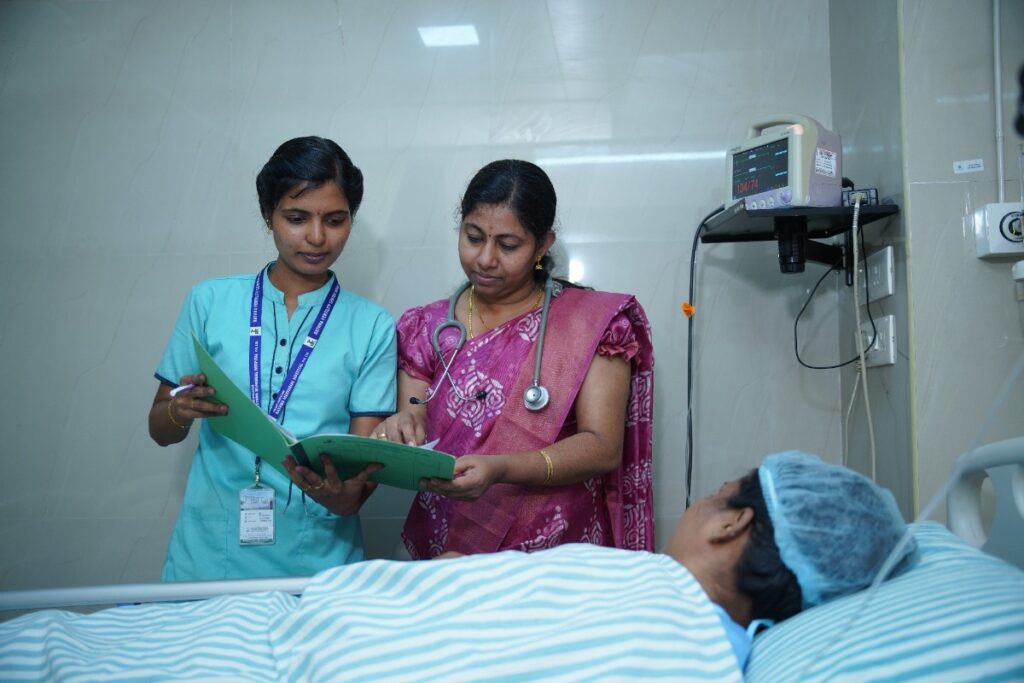




Why Do Doctors Recommend So Many Scans During Pregnancy & IVF Pregnancy?
By Dr. M. Shanthi | Fertility Specialist & Gynaecologist Rathna Fertility Centre,
Kanyakumari, Tamil Nadu
“Are you worried about having too many scans during pregnancy? The truth is, each scan has a specific purpose – to monitor your baby’s growth, check development,ensure your health, and detect any concerns early.”
– Dr. M. Shanthi
"Doctor, why do I need so many scans? Is something wrong?"
First, let me reassure you: frequent scans are not a sign that something is wrong. They are a sign that your doctor is watching over you and your baby with care, precision, and the full weight of medical responsibility.
In this blog, I want to walk you through exactly why ultrasound scans are recommended, what each one is looking for, and why IVF pregnancies in particular require closer monitoring – so that the next time your doctor schedules a scan, you feel informed and at ease rather than anxious.
Before anything else – yes, ultrasound scans are completely safe for both mother and baby. Unlike X-rays, ultrasound uses sound waves, not radiation. There is no credible scientific evidence linking routine ultrasound scans to any harm to the foetus or the mother.
The anxiety around “too many scans” often comes from a misunderstanding – the assumption that more scans means more problems. In reality, more scans simply means more information, more safety, and more peace of mind.
Even in a routine, naturally conceived pregnancy, ultrasound scans are scheduled at key milestones. Each one has a distinct clinical purpose.
Early Pregnancy Scan (6-8 Weeks)
This is the first and most emotionally significant scan for many mothers. It confirms:
- That the pregnancy is located in the uterus (ruling out ectopic pregnancy – a potentially life-threatening condition)
- The heartbeat of the baby – one of the most joyful moments in early pregnancy
- The number of embryos – whether you are carrying a single baby or multiples
- The gestational age and estimated due date
Dating & Viability Scan (8-10 Weeks)
Confirms the baby is developing on schedule and allows for accurate dating of the pregnancy- which guides all future care decisions.
NT Scan-Nuchal Translucency (11-14 Weeks)
A critical screening scan that measures the fluid at the back of the baby’s neck. Combined with a blood test, it helps assess the risk of chromosomal conditions such as Down syndrome, Edwards syndrome, and Patau syndrome. Early detection allows for informed decision-making and preparation.
Anomaly Scan (18-20 Weeks)
Often called the “big scan,” this is a detailed structural survey of the baby. It checks:
- Brain, spine, heart, kidneys, limbs, and abdominal organs
- Placental position
- Amniotic fluid levels
- Baby’s growth and measurements.
This scan can detect structural anomalies that, if identified early, allow for specialist care
planning or early intervention.
Growth Scans (28 Weeks Onwards)
In the third trimester, scans monitor:
- Foetal growth – ensuring the baby is gaining weight appropriately
- Placental function – checking if the placenta is nourishing the baby effectively
- Amniotic fluid – too little (oligohydramnios) or too much (polyhydramnios) can both signal complications
- Baby’s position – especially important as the due date approaches
Doppler Scan
A specialised scan that measures blood flow through the umbilical cord and foetal vessels. It tells us whether the baby is receiving adequate oxygen and nutrients – a crucial check in high-risk pregnancies or when growth concerns arise.
Part 2: Why IVF Pregnancies Need Even More Scans
If you have conceived through IVF, your doctor will almost certainly recommend more frequent monitoring than a natural pregnancy. Here is why – and it is important.
1. The First Few Weeks Are Critical After Embryo Transfer
After an embryo transfer, the first scan (typically at 6-7 weeks) confirms whether the embryo has successfully implanted, where it has implanted, and whether a heartbeat is present. This early confirmation is not just emotionally reassuring - it is medically essential.
2. Higher Risk of Ectopic Pregnancy
IVF pregnancies carry a slightly higher risk of ectopic implantation (where the embryo implants in the fallopian tube rather than the uterus). Early scanning catches this before it becomes dangerous.
3. Multiple Pregnancies Are More Common With IVF
When more than one embryo is transferred, twins or higher-order multiples are possible. Multiple pregnancies require closer monitoring throughout - for foetal growth, cervical length, and the risk of preterm labour.
4. Hormonal Support Needs Monitoring
IVF pregnancies are supported by progesterone and other hormonal medications in the early weeks. Scans help confirm that the pregnancy is progressing well and that hormonal support can be safely adjusted or tapered over time.
5. Emotional Reassurance Is a Real Medical Need
IVF mothers have often walked a long, difficult road to reach this pregnancy. The anxiety they carry is real and valid. Frequent scans do not just check on the baby - they provide the reassurance that keeps stress levels manageable, which itself supports a healthier pregnancy.
6. Detecting Complications Earlier = Better Outcomes
IVF pregnancies are associated with a slightly higher risk of certain complications - including gestational hypertension, placenta previa, and growth restriction. Frequent monitoring means these are caught early, when intervention is most effective.
Part 3: What Happens at Each IVF Pregnancy Scan
Here is a simplified scan schedule for an IVF pregnancy at Rathna Fertility Centre:
|
Scan
|
Timing
|
Purpose
|
|---|---|---|
|
Baseline Scan
|
Before embryo transfer
|
Confirms uterine lining is ready
|
|
Confirmation Scan
|
6-7 weeks
|
Heartbeat, implantation site, number of
embryos
|
|
Viability Scan
|
8-9 weeks
|
Growth, heartbeat, dating
|
|
NT Scan
|
11-14 weeks
|
Chromosomal risk screening
|
|
Anomaly Scan
|
18-20 weeks
|
Full structural survey
|
|
Growth & Doppler
Scans
|
Every 3-4 weeks from 28
weeks
|
Growth, fluid, blood flow
|
|
Pre-delivery Scan
|
36-38 weeks
|
Baby's position, placenta, birth planning
|
Your specific scan schedule may vary based on your individual health, pregnancy history, and how your pregnancy is progressing. Trust your doctor’s recommendation – every scan is scheduled for a reason.
Common Questions Mothers Ask Me
Yes, absolutely. Ultrasound uses sound waves and has been used safely in pregnancy care for over 50 years. No study has ever shown harm from routine diagnostic ultrasound.
Not necessarily. Some scans are routine for all pregnancies. Additional scans may be recommended based on your age, medical history, or the nature of your conception – not because something is wrong, but because careful monitoring is good medicine.
A Note From Dr. M. Shanthi
Every scan I recommend to a patient comes from one place: the desire to see them and their baby arrive safely at the end of this journey.
I know how exhausting frequent hospital visits can be. I know the anxiety that builds before every scan – the hope, the fear, the held breath until you hear that heartbeat. But I also know what happens when warning signs are missed, when scans are skipped, when “everything feels fine” turns out not to be.
Each scan is a window. And through that window, we are watching over your baby- together.
If you have questions about your scan schedule, or if you are an IVF mother anxious about what to expect, please do not hesitate to speak with your doctor – or come in and speak with me directly. No question is too small when it comes to the life growing inside you.
Pregnancy & IVF Care at Rathna Fertility Centre
Whether you are newly pregnant, currently undergoing IVF, or planning ahead – our team
is here to provide the monitoring, support, and expert care your pregnancy deserves.
Rathna Fertility Centre (Rathna Memorial Hospital) 11-208, Swamiyarmadam,
Kattathurai Kanyakumari District, Tamil Nadu – 629 158